
Collection 03 · Fujian & Jiangxi
Authentic Jianzhan tea cup supplier & hand-thrown ceramics.
Iron-rich clay, 1300 °C reduction firing, and a glaze that crystallises differently in every position of the kiln. One bowl, one result — which is precisely why a handmade cup can be priced like an object instead of a vessel.
The craft
The kiln writes the surface. The potter only sets the conditions.
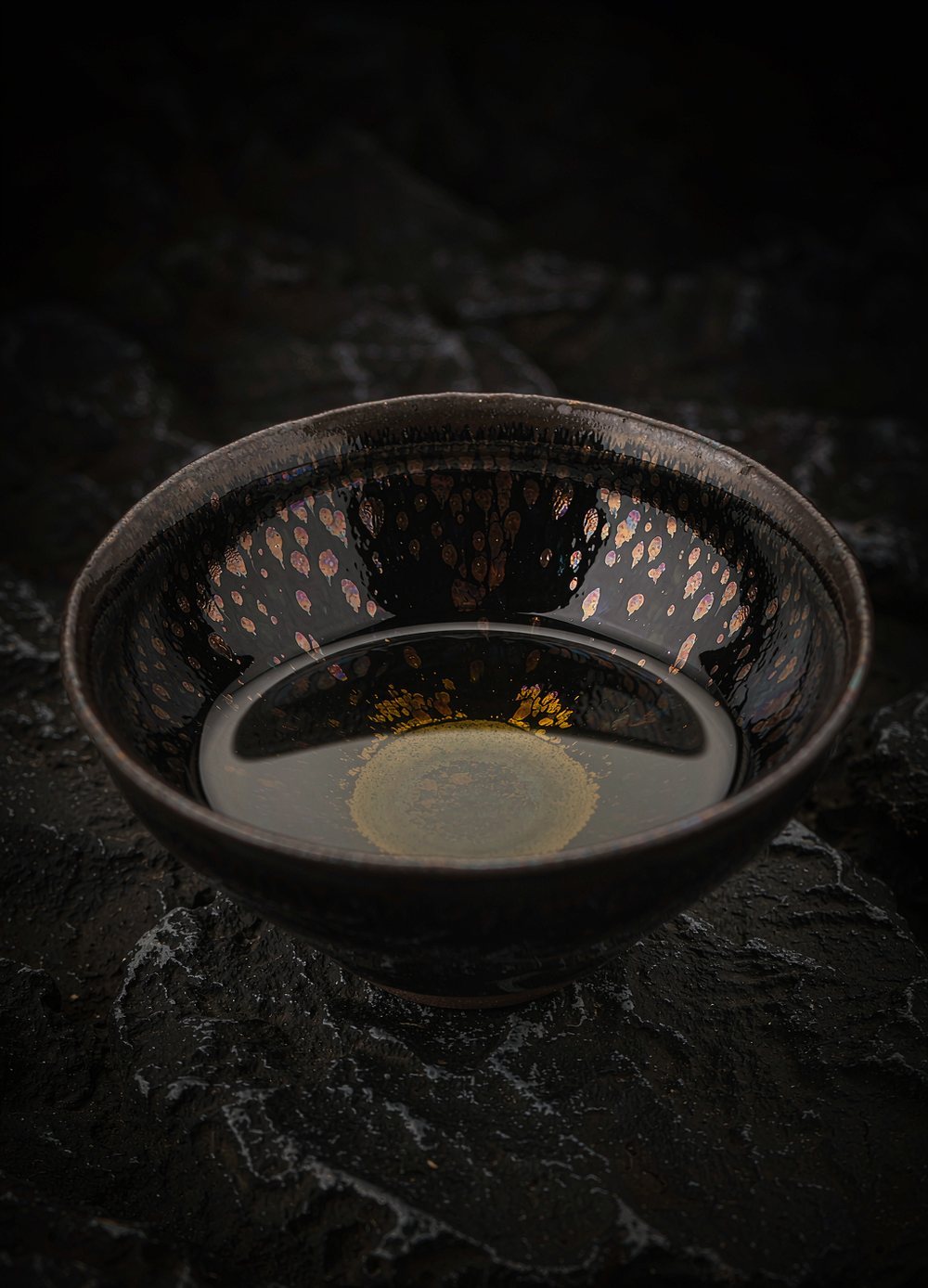
Jianzhan is fired in Jianyang from a local clay with a very high iron content, coated in a glaze that is also iron-rich. Above 1300 °C, in a reduced atmosphere, iron oxide comes out of the melt and crystallises — as oil spots, as hare's fur streaks, or, when the kiln runs hot and slow, as nothing at all. Nobody can place a pattern. The same potter can pull two bowls from the same firing and they will differ in crystal size, density and colour temperature.
That is the commercial fact to build your shelf talker around: the piece in your customer's hand does not exist anywhere else, and the potter's seal on the foot says so. Kiln loss in this category runs 10–20%. We absorb it in the price rather than shipping you the failures, and we sell the honest seconds separately, disclosed as seconds.
- Firing
- 1280–1330 °C, reduction, wood or gas
- Clay
- Jianyang iron clay, 8–12% Fe₂O₃
- Uniqueness
- Crystal pattern non-repeatable by design
- Kiln loss
- 10–20%, absorbed by us
The line
Indicative wholesale pricing.
FOB prices for 30–99 pieces. Ceramics ship by sea in double-wall cartons with pulp moulds; we quote crate cost separately.
Jianzhan oil-spot bowl, potter-sealed
Grade A crystals, sealed foot, cloth sleeve and collector card
Jianzhan hare's-fur cup
Streak glaze, thinner body, designed as the entry price point and café service cup
Jingdezhen celadon plate, hand-painted
Wheel-thrown, brushed underglaze, clear glaze; rim left deliberately irregular
Wood-fired shino tea cup
Ash deposit varies by kiln position; no two alike, often with fly-ash speckle
Yixing zisha teapot, signed
Half-hand or fully hand-built, single-hole or ball filter; maker's seal and certificate
Kiln seconds, disclosed
Pattern defects, glaze runs, warped rims. Sold as seconds in writing, never as firsts
All food-contact glazes are lead- and cadmium-free and tested to FDA 21 CFR and EU 84/500. Reports supplied per firing batch, not per order — ask and we will send the current one.
Before you buy
Four things a decal cannot fake.
-
Tilt it under raking light
Oil-spot crystals sit in the glaze and shift colour as the angle changes. Printed or decal patterns stay flat and identical at every angle.
-
Read the foot ring
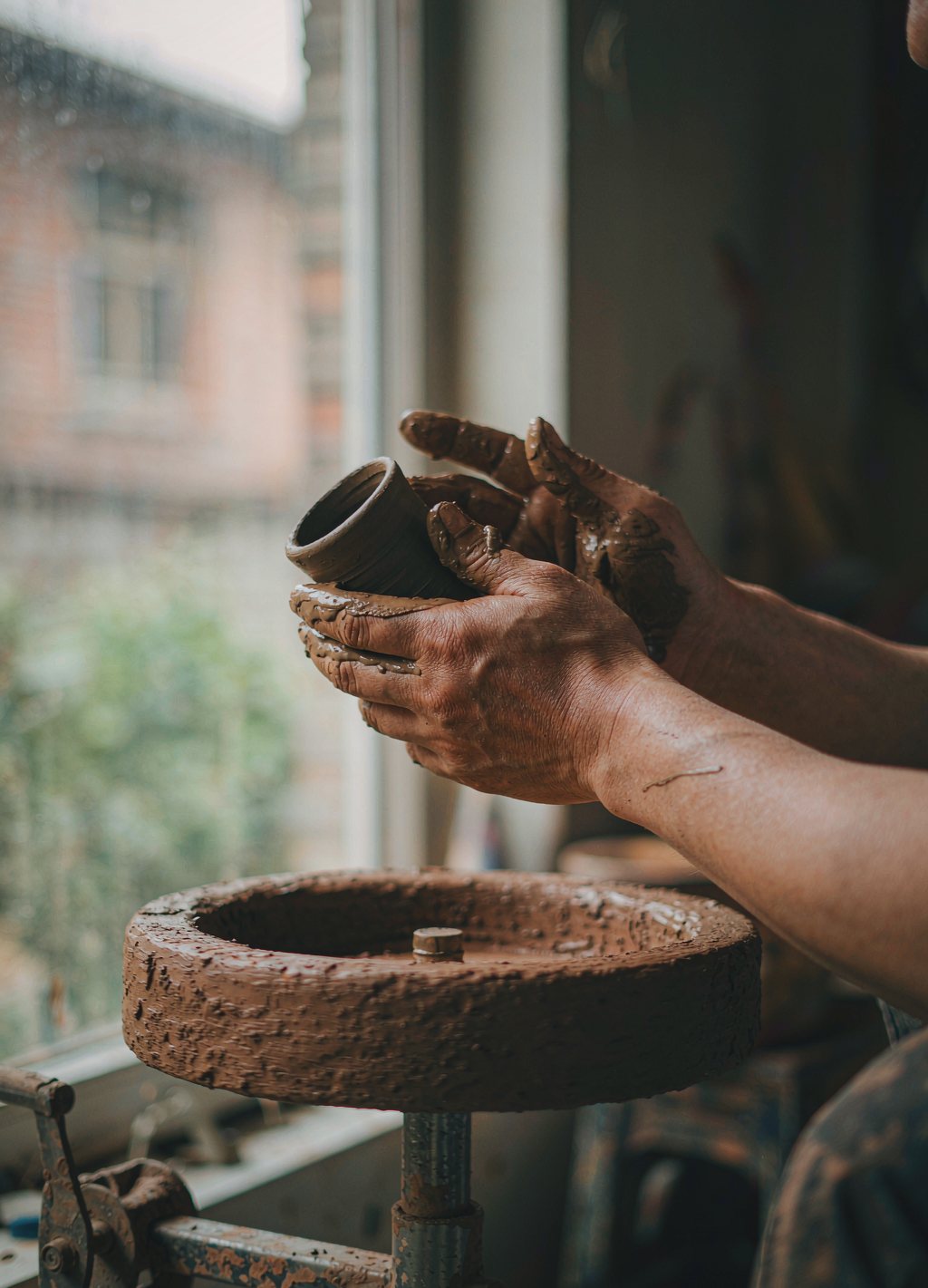
Hand-turning leaves concentric tool marks and a slightly uneven foot. A perfectly smooth, sharp foot ring means it was cast, not thrown.
-
Weigh and ring it
Jianzhan bowls of this size weigh 180–260 g and ring with a short, dull thud on the rim. A high, clear ping often means a thinner, industrial body.
-
Ask for the firing number
Every bowl we ship carries a kiln and firing reference on the collector card. A supplier who cannot name the firing cannot trace the piece.
Questions buyers ask
Ceramics, answered plainly.
How can I tell a real Jianzhan bowl from a printed copy?
Tilt it under raking light: oil-spot crystals sit inside the glaze and change colour with the angle, while printed or decal patterns stay flat. Then read the foot ring — hand-turning leaves concentric tool marks and a slightly uneven foot. Finally weigh it: a bowl of this size should be 180 to 260 grams.
Why is every bowl different, and is that a problem?
Above 1300 °C the iron in the glaze crystallises according to its exact position in the kiln, so the pattern cannot be repeated by design. We treat that as the product, not a defect: each bowl ships with a collector card carrying its kiln and firing reference. Kiln loss runs 10 to 20%, which we absorb rather than pass on as seconds.
Are the glazes food-safe?
Yes. All food-contact glazes are lead- and cadmium-free and tested to FDA 21 CFR and EU 84/500. Reports are issued per firing batch rather than per order, and we will send the current one on request before you commit.
Do you sell kiln seconds?
Yes, and we label them as seconds in writing on the invoice and the carton. They carry pattern defects, glaze runs or warped rims and are priced at USD 5 to 8. We never mix seconds into a first-quality order.
How do ceramics ship without breaking?
By sea in double-wall cartons with pulp moulds, three-layer separation between pieces. Air freight is possible but expensive because of volumetric weight. We photograph every piece before packing and replace or credit transit damage reported with photographs within seven days of delivery.
Collection 03
Order a firing set, not a single cup.
Six bowls from one firing so you can see how much the kiln varies within a batch — and price accordingly. USD 88 including air freight.