
Collection 02 · Fujian & Zhejiang
Handmade lacquerware & woven bamboo, wholesale from China.
Twenty coats of tree sap, cured in a humid room for two days each. Bamboo split to half a millimetre and woven without a jig. This is the collection that interior designers and hotel projects buy — quiet, dark, expensive-looking, and impossible to ship from a factory mould.
The craft
Lacquer is not paint. It is a material that takes weeks to become itself.
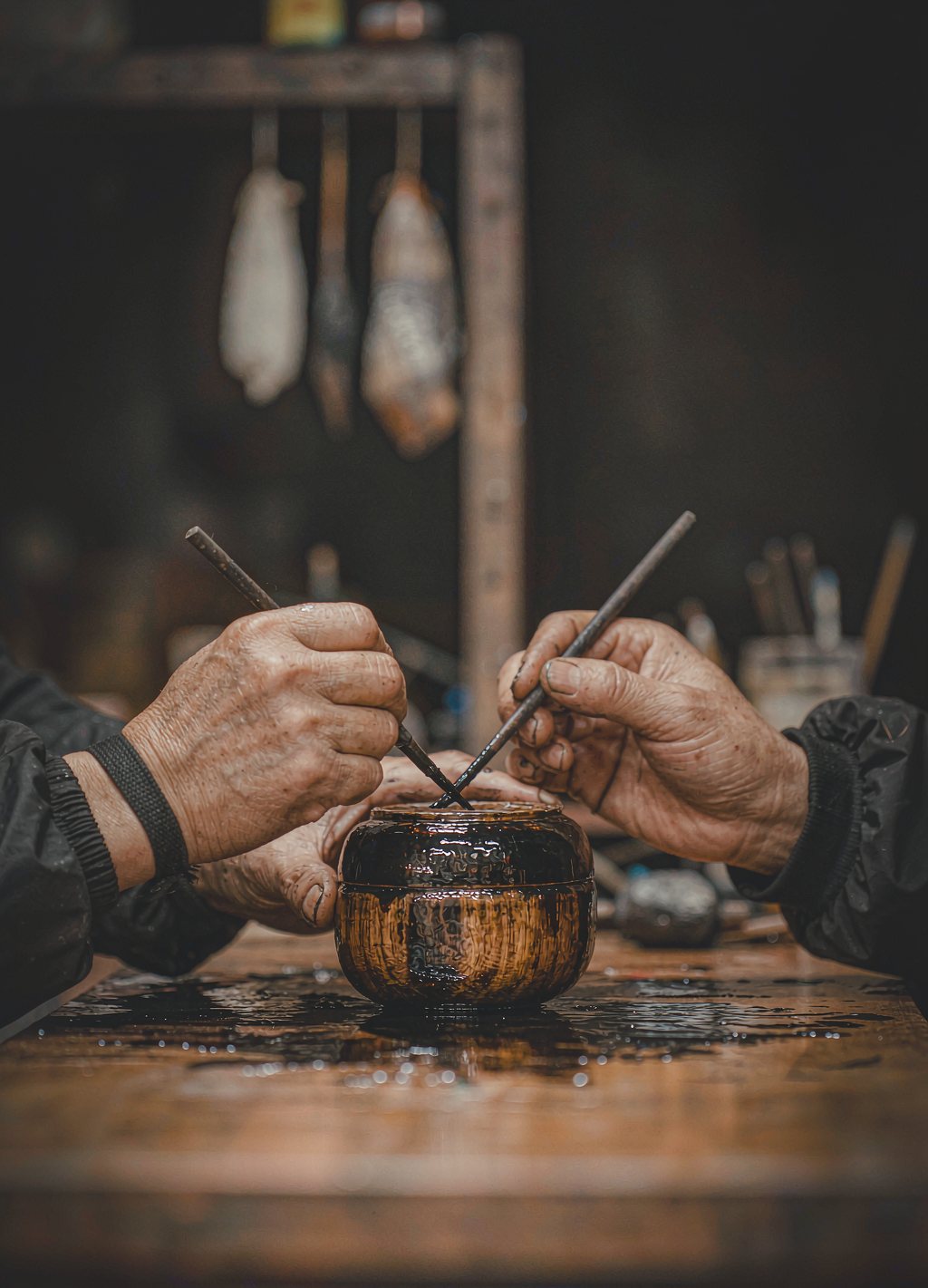
Fuzhou bodiless lacquer begins with a clay or wood core wrapped in hemp cloth and raw sap. Once the shell is strong, the core is removed — the vessel that remains is cloth and lacquer only, which is why a 20 cm box weighs less than an empty paper cup feels like it should. Each of the twenty to forty coats must cure in a warm, humid cabinet for 24–48 hours before the next. Then it is polished with charcoal, then with the palm of a hand.
The bamboo is Anji moso, split while green into strips under a millimetre thick, then woven over a flame-bent frame. The lamp shades are built to flat-pack: the frame opens, the weave holds tension, and the carton is a third the volume of the assembled piece. That single decision is what makes bamboo lighting viable at wholesale.
- Lacquer source
- Tapped sap of Toxicodendron vernicifluum
- Coats
- 20–40, hand-applied, cabinet-cured
- Bamboo
- Moso, split 0.6–0.9 mm while green
- Variance
- Surface micro-bubbles and tone drift are normal
The line
Indicative wholesale pricing.
FOB prices for 30–99 pieces. Lacquer runs longer than textile — book 60 days minimum, 90 in Q4.
Bodiless lacquer tea caddy
Hemp-shell body, 28 coats, hand-polished; lid seats with a paper-thin tolerance
Lacquer jewellery box, twelve-coat
Wood core, red or black, felt-lined; the entry price point for gifting
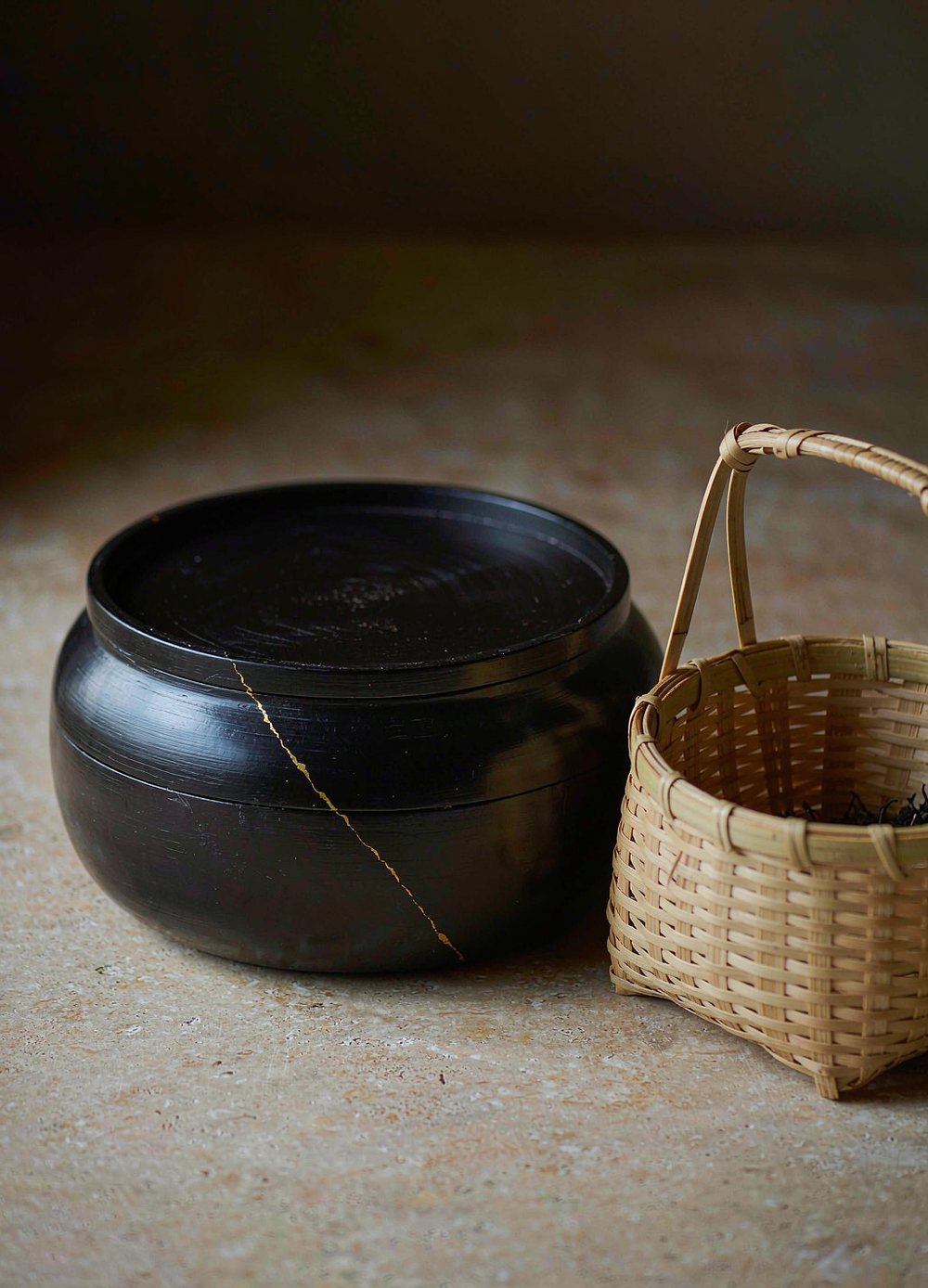
Lacquer tray with gold repair line
Hand-brushed kintsugi-style seam in brass powder; each seam placed differently
Split-bamboo pendant lamp
Flat-packing shade, E26/E27 fitting, 1.5 m fabric cord; ships collapsed
Bamboo tea basket, hexagonal weave
Carry handle, removable inner tray, unfinished or oiled finish
Lacquer cup pair, tea or sake
Turned wood, eight coats, stackable; sold in pairs in a cloth sleeve
Lacquer is food-safe when cured; we supply a migration test report on request. Do not sell lacquer as dishwasher-safe — it is not, and that single claim causes most returns in this category.
Before you buy
How to tell real lacquer from resin, in ten seconds.
-
Warm it in your hand
Natural lacquer stays cool and gains a faint nutty, almost medicinal scent. Resin goes warm and smells of solvent.
-
Look along the edge, not the face
Real lacquer builds a visible film of 0.1–0.3 mm that follows the form. Resin sits as a single thick skin with a sharp cut line.
-
Scratch the underside
Lacquer scratches pale and powdery. Resin lifts in a plastic curl. We send an offcut with every sample box so you can test without touching stock.
-
Weigh it
A bodiless tea caddy of this size weighs 90–130 g. Anything over 200 g almost certainly has its core still inside.
Questions buyers ask
Lacquer & bamboo, answered plainly.
Is the lacquer real tree sap or a synthetic coating?
Real sap tapped from Toxicodendron vernicifluum, built up in twenty to forty coats and cabinet-cured. It is food-safe when fully cured. We ship a raw lacquer offcut in every sample box so you can run the scratch test yourself: sap scratches pale and powdery, resin curls like plastic.
Why does lacquerware take so long?
Each coat needs 24 to 48 hours in a warm, humid curing cabinet before the next can go on. Twenty to forty coats is therefore six to twelve weeks of elapsed time, not labour time. There is no shortcut that produces the same film, which is why the price does not fall with volume the way machine goods do.
Can lacquerware go in a dishwasher?
No. Never state that in your retail copy — it is the single most common cause of returns in this category. Wash by hand in cool water, dry immediately, keep out of direct sun. We print this on the care card in your packaging.
Do the bamboo lamp shades ship assembled?
No, they ship collapsed and the shade opens on a flame-bent frame. Packed volume is roughly a third of assembled volume, which is what makes bamboo lighting viable by sea freight. Assembly takes about a minute and requires no tools.
What is the minimum order and lead time?
Ten pieces per SKU, mixable within the collection. Book sixty days minimum and ninety in the fourth quarter, because the curing schedule cannot be compressed by adding staff.
Collection 02
See the lacquer before you commit.
Sample set of five pieces plus a raw lacquer offcut for the scratch test. USD 96 including air freight, credited against your first order.