
Collection 01 · Guizhou & Yunnan
Wholesale Chinese indigo handwoven fabric & Miao hand embroidery.
Dyed in fermented plant vats, stitched by counting threads rather than following a printed pattern. This is the line that made our reputation with boutique buyers — because it is the cheapest craft to ship and the easiest to prove by hand.
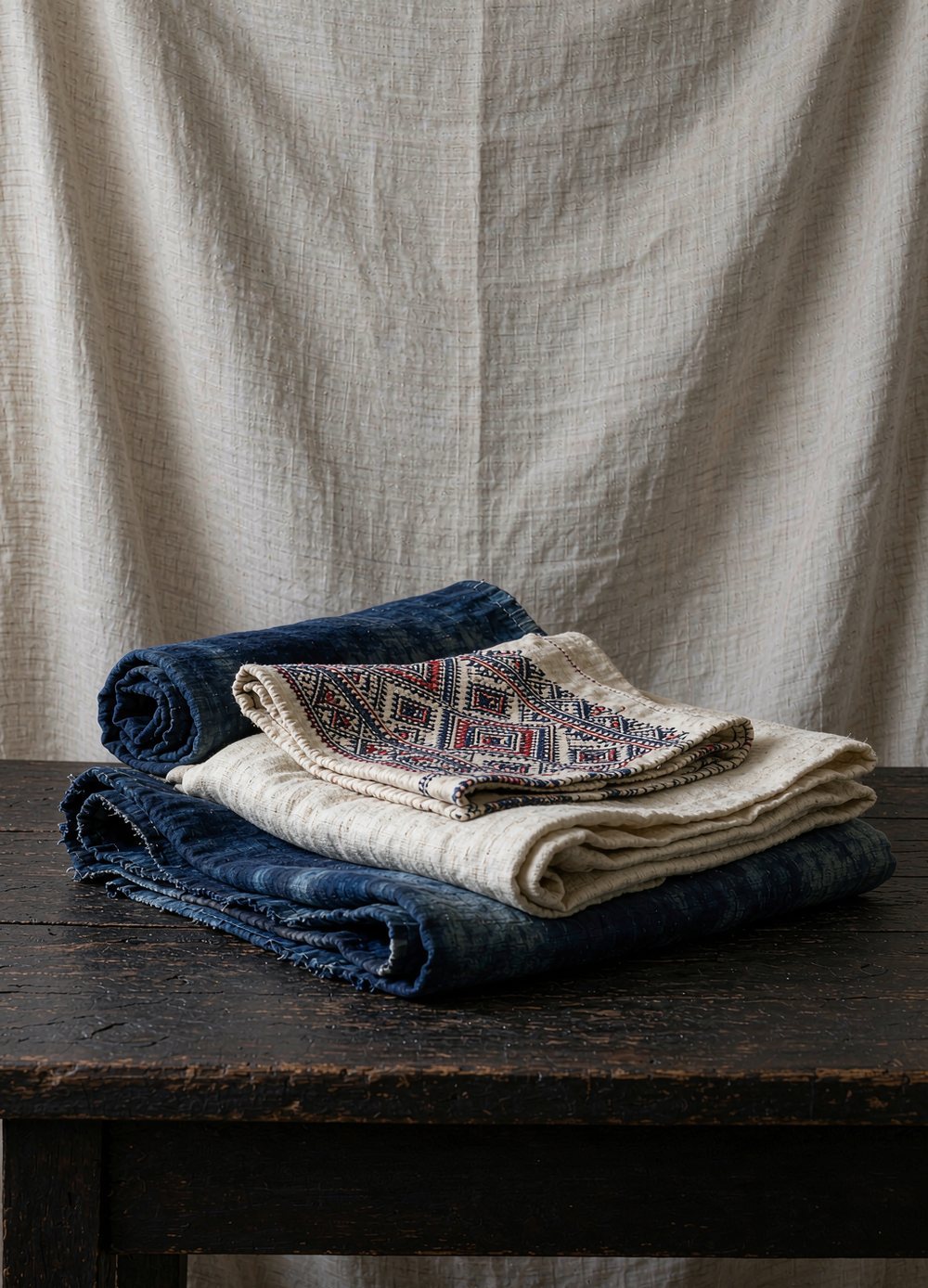
The craft
Indigo is a living thing. You can smell the difference.
In Leishan County the dye vat is fed with fermented Strobilanthes cusia — the same plant used for centuries before aniline blue existed. The vat is kept alive with lime and rice wine, stirred twice a day, and rested between dips. A cloth goes in eight to twelve times to reach the deep, slightly green-black indigo that photographs as almost black and opens up in daylight.
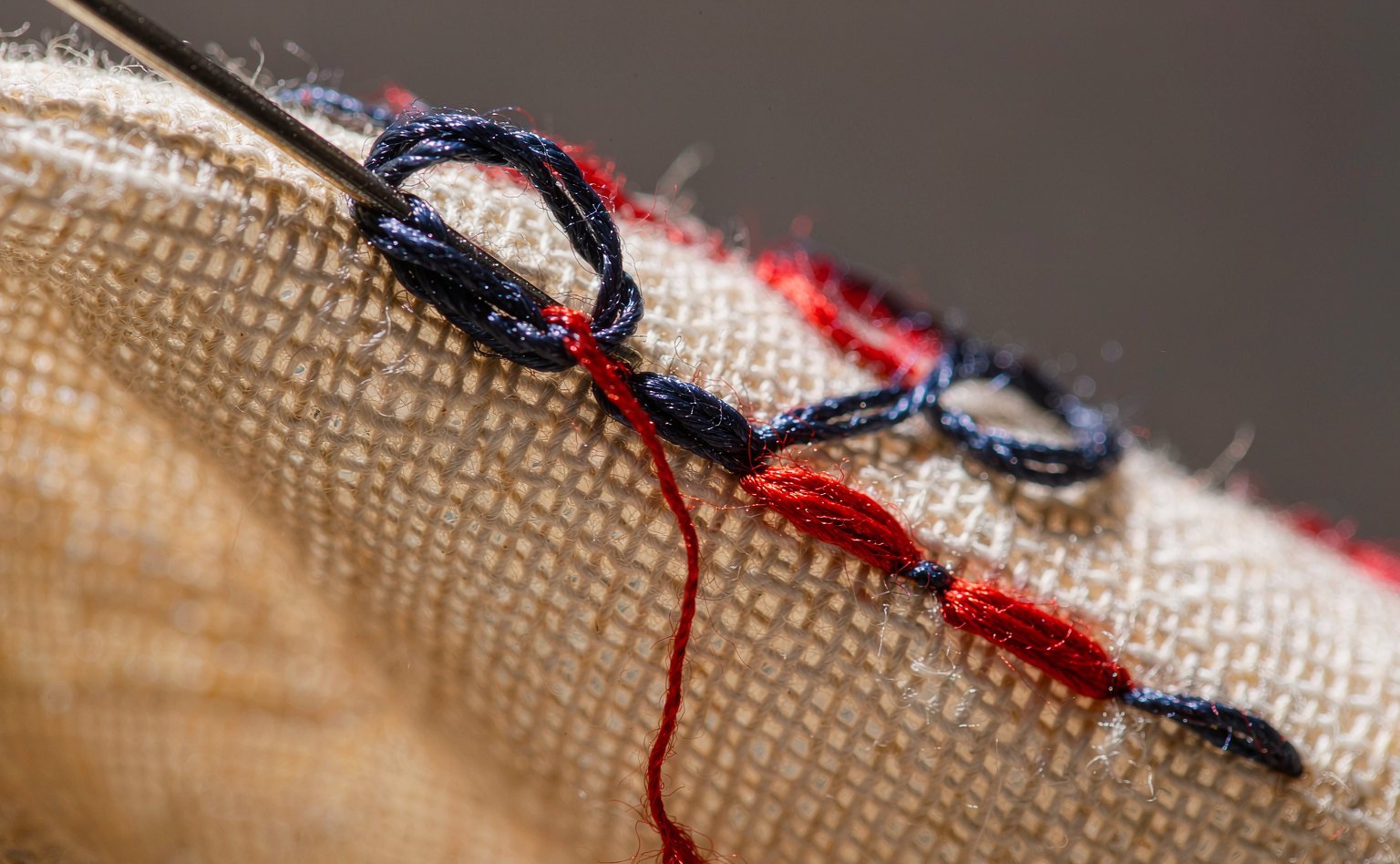
The embroidery beside it is counted-thread work: no pattern is printed on the cloth. The maker counts warp and weft and builds the geometry from memory, which is why the same motif differs by a millimetre or two between two pieces made by the same hand in the same week. Synthetic indigo and machine stitching can imitate the colour. They cannot imitate that counting.
- Dye source
- Fermented Strobilanthes cusia, lime, rice wine
- Dips
- 8–12, air-oxidised between each
- Stitch
- Counted thread, 18–24 stitches per cm²
- Variance
- ±5% dimension, dye lot always differs
The line
Indicative wholesale pricing.
FOB prices for 30–99 pieces. Below 30 the per-unit cost rises 12–18%. Quotations are confirmed per order, not per page.
Plant-indigo scarf, hand-hemmed
Twelve dips, hand-rolled hem, slight colour shift along the length
Miao counted-thread cushion cover
Geometric motif, indigo and madder silk on hand-woven cotton, hidden zip
Batik wax-resist table runner
Hand-drawn wax resist, cracked-ice pattern, plant indigo ground
Indigo cotton, by the metre
Hand-woven on narrow looms, 110 cm cut width, natural selvedge
Embroidery patch, framed or loose
Vintage and new panels; sold as collectible trim for jackets and bags
Indigo tote, hand-folded base
Heavy hand-woven cotton, folded (not stitched) base, leather-free handles
Every SKU ships with a spec sheet stating dye method, stitch count, dimensional tolerance and care instructions. Private label and custom colourways from 60 pieces.
Before you buy
Four checks that separate hand work from machine work.
-
Turn it over
Hand work leaves knots, carried threads and a slightly messy reverse face. A clean, fused backing sheet is the first sign of machine production.
-
Count one square centimetre
Hand stitching averages 18–24 stitches per cm² with visible rhythm changes at corners. Machine work holds a constant, mechanical interval.
-
Rub a hidden corner with a white cloth
Natural indigo crocks lightly and unevenly. Synthetic indigo usually transfers as a bright, uniform blue-green.
-
Ask for the vat
We send photographs and video of the actual dye vat and the maker at work, dated, with the order number. If a supplier cannot show a vat, there is no vat.
Questions buyers ask
Indigo & embroidery, answered plainly.
What is the minimum order for indigo textiles?
Ten pieces, and you can mix SKUs inside a single craft line — for example four scarves, four cushion covers and two tote bags. Fabric by the metre starts at 30 metres. Below ten pieces we only sell samples, because setting up a workshop run costs more than the order is worth.
Is the indigo natural or synthetic?
Natural, fermented from Strobilanthes cusia in Leishan County. You can verify it three ways: the vat photographs and video we send with the order, the dull grey-blue crock transfer on a damp white cloth, and the earthy sour smell of a live vat. Synthetic indigo transfers bright and uniform and does not shift toward green in daylight.
Will every piece look exactly like the photo?
No, and no honest supplier should promise that. Dye lots differ, stitch density varies three to five percent, and dimensions carry a ±5% tolerance. We state this on every spec sheet so that your customer reads it as authenticity rather than a fault. If you need tight colour matching, we can work to a lab dip at 150 pieces or more.
Can you put my label on it?
Yes, from 60 pieces per SKU for woven labels and hangtags, and from 100 pieces for rigid gift boxes. We print your artwork, supply a proof before production, and can also brand the story cards that ship with the goods.
How long does production take and how does it ship?
Thirty to sixty days depending on the technique and the season, longer in the fourth quarter. Textiles ship by air freight or express because they are light and compressible — typically five to twelve days door to door. FOB, CIF and DDP terms are all available.
Collection 01
Request the indigo sample set.
Six pieces across dye depth and stitch type, with the maker's name on each card. USD 68 including air freight, fully credited against your first order.